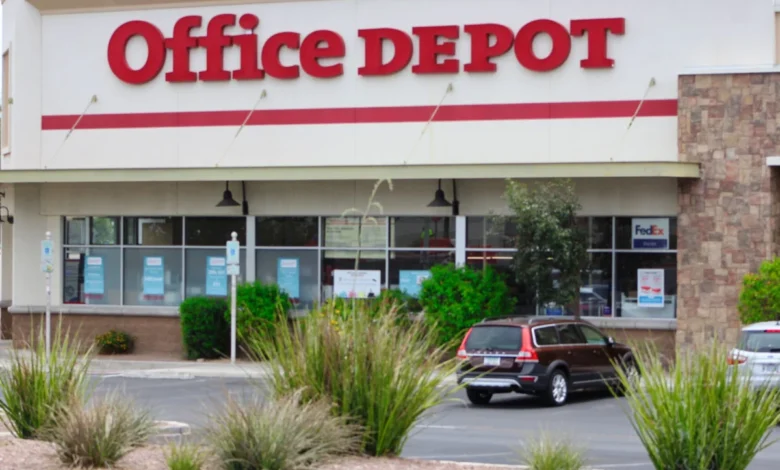
A Legacy Reclaimed: The Strategic Shift
For the past several years, the organization has navigated a complex corporate structure following various divestitures and restructuring efforts. By returning to the core Office Depot name, leadership is betting on the long-term recognition of a brand that has become synonymous with office supplies since its founding in 1986. Craig Gunckel, the CEO of Office Depot, emphasized that the decision is rooted in the company’s desire to leverage its historical footprint to secure its future.
"Office Depot is a brand with more than 40 years of history behind it—the kind of recognition that can’t be built overnight, only earned over decades by showing up for our customers, our partners and the communities we serve," Gunckel noted in a public statement released via LinkedIn. The transition is currently underway, with the new corporate branding set to roll out across the company’s digital portals, official communications, and social media channels over the coming weeks.
Chronology of a Transformation
The evolution of the organization has been marked by significant milestones, shifting from a retail-heavy model to a diversified B2B and distribution powerhouse.
- 1986: The first Office Depot store opens in Lauderdale Lakes, Florida, pioneering the office supply warehouse concept.
- 2013: Office Depot merges with its primary rival, OfficeMax, creating a retail giant with thousands of locations.
- 2022: The company undergoes a major corporate restructuring, effectively splitting its consumer-facing retail and its B2B distribution business into distinct units, leading to the creation of the ODP Business Solutions brand.
- 2024: The company announces the full reunification of its business units under the Office Depot Group name, retiring the ODP Business Solutions moniker in favor of a singular brand architecture.
This trajectory reflects a broader trend in the retail industry, where established legacy companies are grappling with the need to modernize while retaining the trust of a multi-generational customer base.
Market Standing and Competitive Landscape
Office Depot currently holds the 24th position in the prestigious Digital Commerce 360 Top 2000 Database, a comprehensive index of North American online retailers ranked by annual ecommerce sales. Despite the rise of digital-native competitors and the dominance of e-commerce platforms, Office Depot remains a titan in the office supplies sector. It currently ranks as the second-largest retailer in its category, trailing only Staples.
The competition in the office supply market remains intense. As businesses continue to digitize their operations, the demand for physical inventory—paper, ink, and traditional office furniture—has shifted. This has forced major retailers to pivot toward "solutions-based" models, offering managed print services, technology procurement, and workplace consulting. The rebranding to "Office Depot Business" is a direct signal to the market that the company intends to be viewed as more than a store, but rather as a comprehensive provider of workplace operational support.
Branding Risks and Expert Analysis
While the consolidation of branding is intended to provide clarity, industry analysts suggest that the strategy is not without significant risk. The primary challenge lies in the perception of the "Office Depot" name. For forty years, the brand has been firmly planted in the minds of consumers as a retail storefront—a place to purchase printer cartridges or school supplies.
Alys Reynders, chief marketing officer at the operations platform Quickbase, highlighted the potential for brand dilution. "One big concern is that procurement officers have already built four decades of connotations to the Office Depot brand as a brick-and-mortar entity, which could dilute the identity of the company and its perceived areas of expertise," Reynders observed. She notes that by aligning under a single banner, the company risks limiting its perceived scope. If customers continue to view the brand exclusively as a retail outlet, they may overlook the sophisticated B2B supply chain and procurement services the company offers.
However, Reynders also acknowledges the potential benefits of the change. "Overall, this stronger alignment means that Office Depot has the opportunity to unify its identities beyond the barriers created by operating under different names," she said. "It can take some smoothing out by marketing teams, but when managed effectively, operating under a single entity can stamp out customer confusion about who the brand is and its heritage."
The Challenge of Modernization
Shailendra Pratap Jain, a professor of marketing at the University of Washington’s Foster School of Business, provides a critical perspective on the strategic implications of the move. According to Jain, the success of this rebrand will depend on the company’s ability to evolve its value proposition.
"Renaming ODP Business Solutions as Office Depot Business gives the company immediate familiarity and legitimacy," Jain explained. "It also creates a strategic challenge: can a brand strongly associated with retail office supplies stretch credibly into a broader B2B solutions and distribution identity?"
Jain argues that the name change is merely a surface-level adjustment if it is not supported by a fundamental change in operations. "The name itself cannot accomplish the turnaround," he cautioned. "The real test is whether Office Depot can convert legacy brand awareness into a new meaning—from ‘the place where businesses buy office supplies’ to ‘the company that helps businesses operate.’"
To achieve this, the company must execute a multifaceted strategy that includes:
- Refining the Product Mix: Shifting inventory focus toward high-demand technology and workplace ergonomic solutions.
- Targeting Strategies: Tailoring messaging to distinct segments, such as small-to-medium enterprises (SMEs) versus large corporate clients.
- Customer Experience: Enhancing the digital procurement interface to compete with modern, agile B2B e-commerce platforms.
Broader Implications for the B2B Sector
The rebrand of the Office Depot Group serves as a case study for legacy firms in the digital age. As companies like Staples and Office Depot attempt to navigate a shrinking physical retail footprint, they are forced to lean heavily into their B2B divisions. By folding these divisions back under the primary brand, these firms are essentially betting that the equity of their name is worth more than the benefits of having a specialized, separate B2B brand identity.
This move follows a trend of "corporate simplification," where large firms remove sub-brands to reduce marketing spend and improve search engine optimization (SEO) performance. By directing all digital traffic to a single domain and brand, the company aims to capture more organic search traffic and present a unified front to institutional investors and procurement officers alike.
Looking Ahead
The coming months will be a critical testing period for the new Office Depot Group. As the company transitions its branding across its nationwide network of stores and its vast online distribution platform, market analysts will be watching to see if the unified identity helps or hinders its growth in the B2B space.
The ultimate measure of success will not be found in the change of a logo or a domain name, but in the company’s ability to retain its retail relevance while expanding its footprint in the increasingly competitive B2B service sector. Whether the move allows the company to become a one-stop-shop for modern business operations, or if it remains tethered to its legacy retail identity, remains to be seen. As Professor Jain noted, the company’s future hinges on "whether returning to the past becomes an asset for the future."
For now, the Office Depot Group has set its course, banking on the power of a brand that has helped businesses function for nearly half a century to carry it through the next chapter of its evolution. As the digital landscape continues to change, the company’s ability to adapt its operations to match its new, unified brand will determine if this consolidation is the key to a successful, sustainable turnaround.